
Mechanism
CMF
Recycled, milled aluminum external parts.


Durable, injection molded ABS core.

Durable, injection molded ABS core.
Removable parts for cleaning and replacement
1.5" cubed
Milled aluminum
Prototyping and testing
After determining which designs are the most feasible, it was time to make some prototypes for my original interviewees to tryout.
Tamagotchi style activity tracking
Participants reported having trouble starting and stopping breaks, and not having sufficient justification for taking breaks.
Lots of interest but less need for this product. Participants were fond of it but ultimately chose other options.
"This is the most fun."
"I really like having a fidget toy."
Rubiks cube mechanism
After participants reported needing to keep their hands busy during lectures, this concept allows mindless movement to relive fatigue.
Participants later reported liking a fidget toy option, but not knowing why this product stands out.
"It's very discreet."
Fidget jewelry
Wearables make the constant moving between classes less of a hassle. Participants want subtle fidget toys, and also need reminders to take breaks.
Participants thought a wearable fidget was valuable, but male responses were less interested. The subtle vibration reminders were popular.

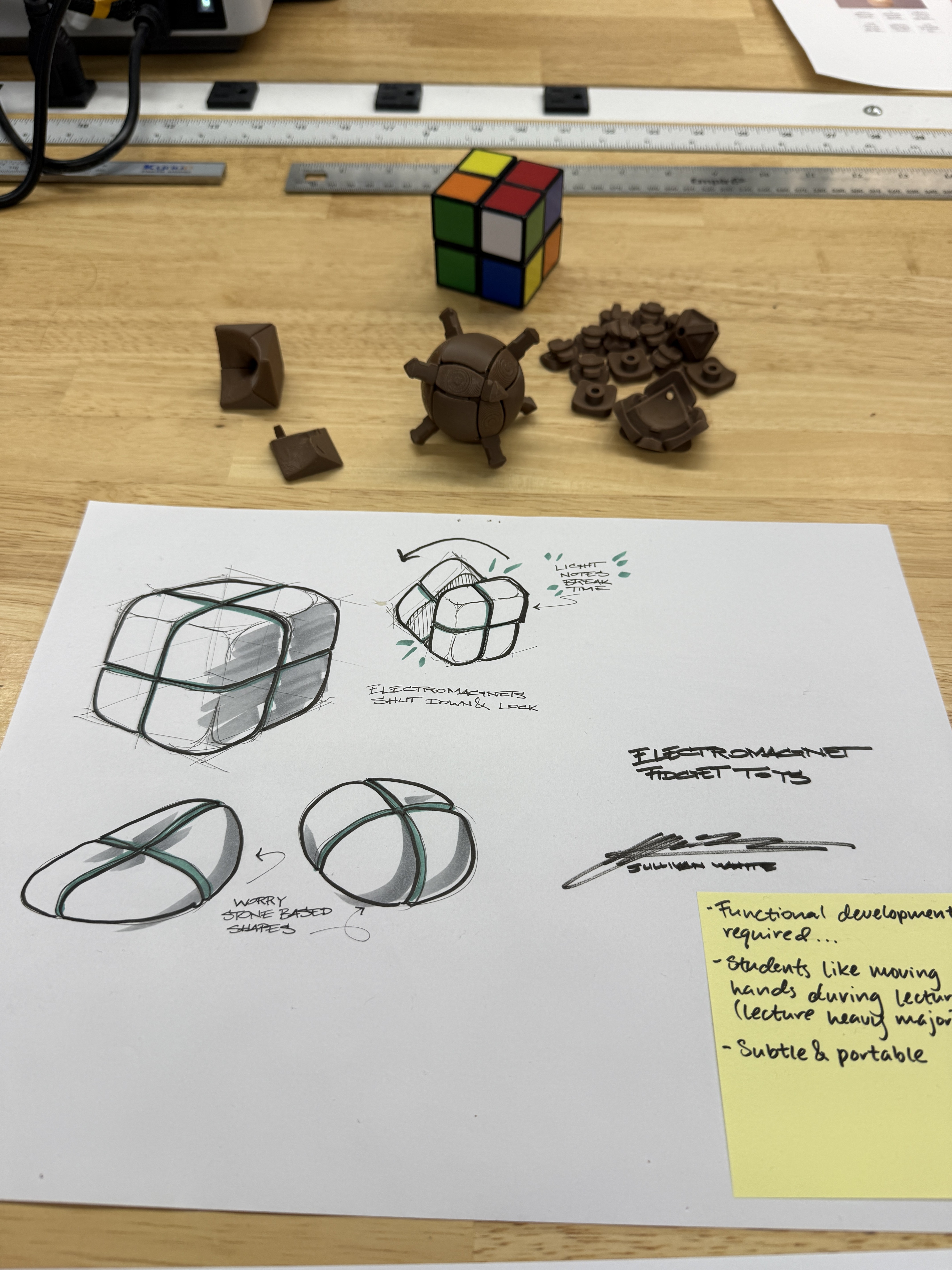


Variations and testing
Creating size and texture variations testing them with participants again
Small Cube
Users enjoyed the smaller size with smooth fillets, and also commented on feeling satisfied with the tolerance and ease of movement.
Large Cube
Users enjoyed the smooth motion of the bigger core, but the design fell short because the size is difficult to make portable.
Not a Cube
Users enjoyed the form, and would interact with the form outside of twisting the mechanism. Users are very satisfied with this form.

Moving forward with the not cube
Best response from students, and scaled to be portable.


Moving forward with the mechanism
This product offers idle movement for lectures when students are not able to take breaks. It is portable, easy to use, and presents an alternative to phone use.

Mechanism
How might we allow students to relieve cognitive overload when taking a break is not possible?
Third year Fall 2026
What are students' lifestyles like already?
Narrowing down, let's look at psychology and criminology students.
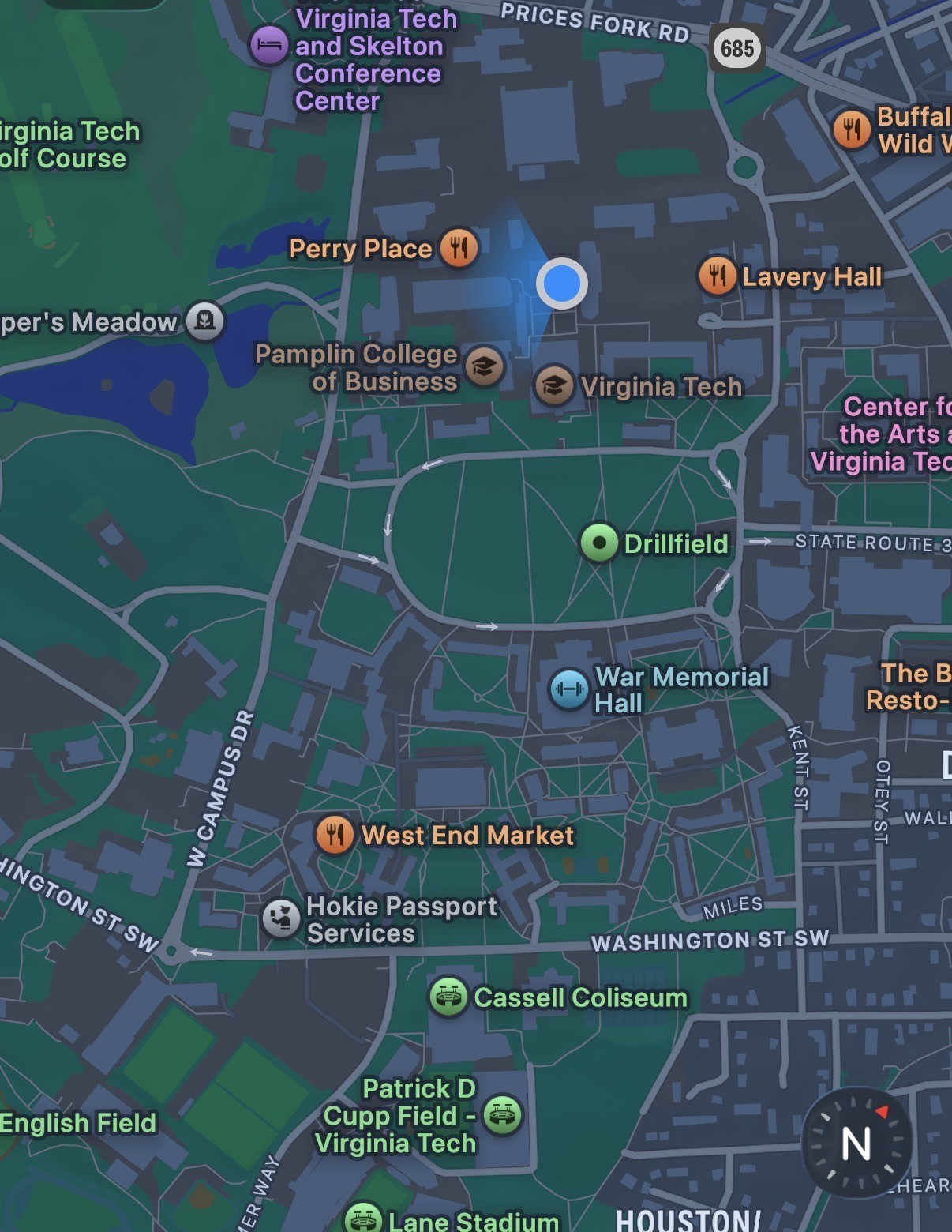
Bus Loop
McBryde
Hutcheson
McComas
McBryde Hall

*

*
*
*
*
McComas Hall
Hutcheson Hall
Courses are mainly lecture based, and the lectures are between a 5-minute walk from the bus loop, to a 20 minute walk.
5-20 min
What do students say?
I interviewed 5 students in psychology and criminology, here's what I found.

Sources of fatigue
Application of vocabulary to heavy case studies
Social case studies
Long lectures that strain attention

Healthy habits
Change of environment
Physical activity like running, playing sports, walking, etc
Sedentary activities like drawing and playing games

Breaktime values
Little cognitive effort
Physical rest
Reducing stress related to course work

Challenges
Difficulty ending break time
Fear of being judged for taking a break
Too busy to take a break
What do students actually do, though?
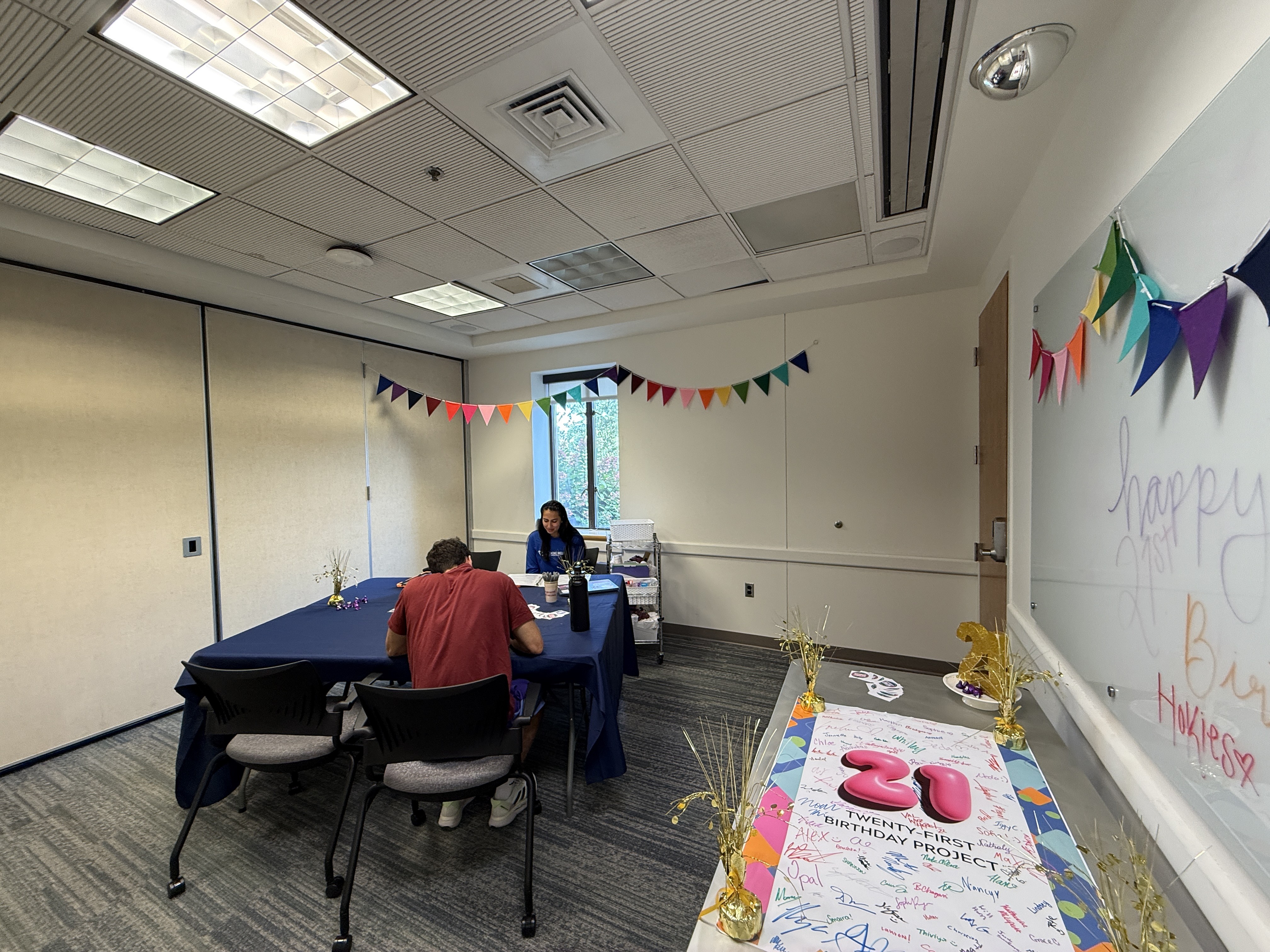
I joined a participant with their courses for a day to see what break behavior they really participated in.

Opportunities:
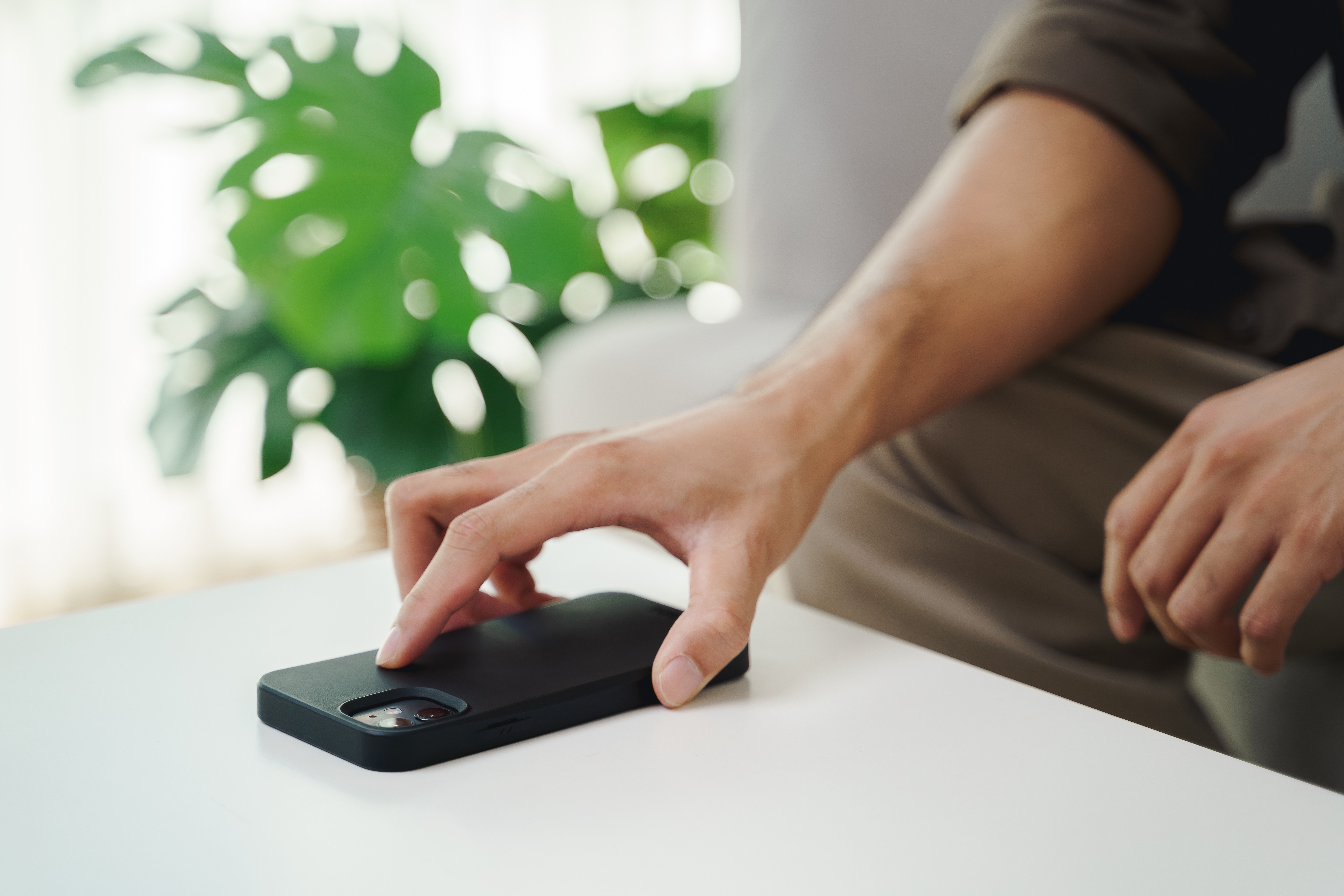

Removal from phones
Break timing assist
Providing cues
Success criteria:
How might we allow students to relieve cognitive overload when taking a break is not possible?


Timing assist
Low barrier
Portable
Not an app

Research

Considerations